

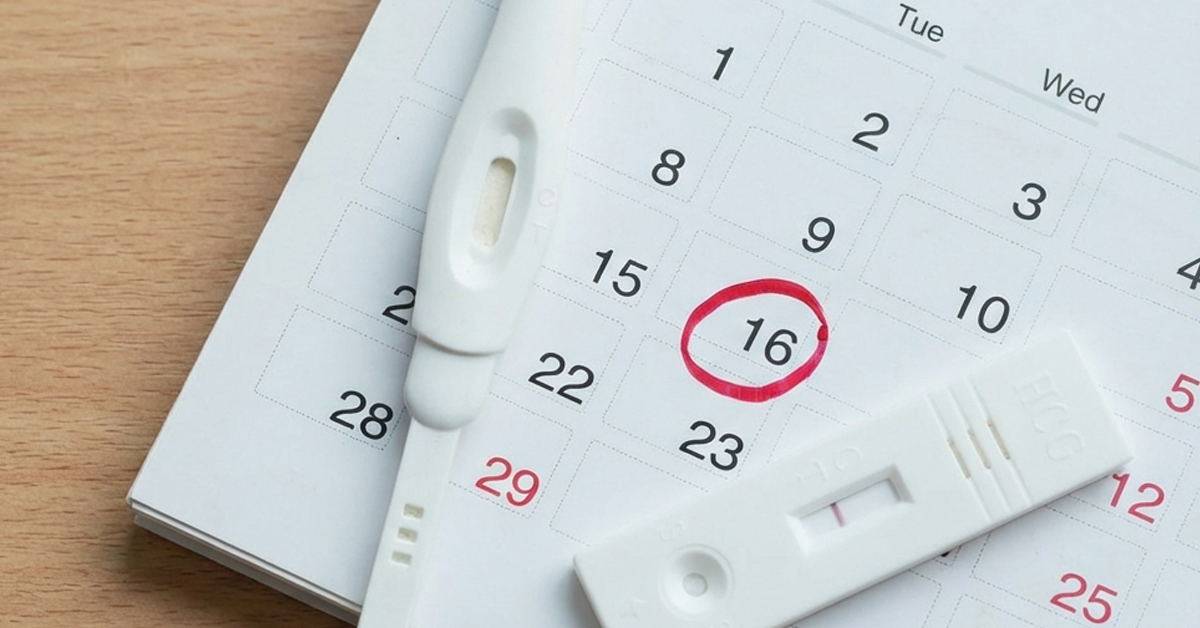
In Saudi Arabia today, women’s lives are changing in many positive ways. With broader access to education, expanding opportunities in work and study, and greater autonomy around family planning, many women are choosing to start families at a time that aligns with their personal circumstances and values.
As a result, pregnancy may be considered at a range of ages, often later than in previous generations. While these shifts reflect women’s agency and choice, it’s also true that biological fertility follows patterns that remain unchanged. Understanding how age can influence fertility can help women make informed decisions about their reproductive health, at the stage that feels right for them.
With so much information available, from friends’ experiences to online resources, it can help to know with some certainty which factors are most relevant to your own situation. Understanding how your body changes over time can empower you to make informed decisions that align with your goals and timeline.
Health organisations such as the National Institutes of Health recognise age as an important factor in female fertility, even in women who are well and feel physically younger than their years.
A woman’s fertility changes because egg quality and quantity decline over time. This is a natural biological process, and not a phenomenon caused by personal choices or lifestyle decisions.
Women are born with a finite number of eggs. As years pass, the number of eggs and their genetic quality gradually decline. This can affect how often ovulation occurs, how long it may take to conceive, and how well pregnancies progress.
For many women, their 20s and early 30s are a time of strong reproductive potential. Ovulation is usually regular, and the likelihood of conceiving each cycle is generally higher than in later years.
These years often coincide with important life decisions around education, career, and relationships. Choosing to delay pregnancy during this time is common and completely valid. Understanding how fertility evolves during these years can help you make informed choices that align with your life plan.
Once over thirty five, one-third of women experience fertility problems, rising to two-thirds when over forty. This tends to be because the number and quality of the eggs in the ovaries declines.
Of course, many women still conceive naturally during this stage. But being aware of these changes can help you plan and make informed decisions about your reproductive health.
Fertility in your 40s tends to be more variable. With a lower ovarian reserve and less predictable ovulation, getting pregnant may take more time.
Some women still conceive naturally, but timelines become more important. Understanding these changes early helps avoid uncertainty and emotional strain.
People often think of fertility decline in terms of egg numbers, but egg quality plays an equally important role.
As eggs age, the likelihood of chromosomal changes increases. This can affect conception and how a pregnancy progresses. These changes occur naturally and affect all women, regardless of fitness, diet, or overall health.
This is one reason fertility can change even when periods remain regular.
While a healthy lifestyle can make a difference for your reproductive health, it won’t alter your natural biology.
Celebrities and online stories can sometimes imply that the right habits can completely offset age-related biology. Even though taking care of yourself is important, it’s best to think of lifestyle as support, and not a replacement, for your body’s natural reproductive changes. Understanding this helps set realistic expectations and make informed decisions.
Seeking guidance because of age doesn’t mean committing to treatment. It can simply help you understand where things stand.
Age may be a reason to seek guidance if:
A growing number of couples, not quite ready to start their family, are taking fertility tests to answer the question ‘what’s my fertility?’ If fertility problems are spotted early, it can improve chances of conception later.
If you would like to learn more about age and female reproductive health, visit our Female Fertility page.
Every woman’s timeline is personal, and while age is a factor, it’s far from a verdict on what’s ahead.
At CHILD Fertility, our goal is to provide clear, evidence-based insights into your fertility so you can feel informed and in control. When questions begin to arise, you’re welcome to reach out to us for a confidential conversation about your next steps.

2022 Rola is Proudly Powered by HiBootstrap