


What is IVF?
IVF, or in vitro fertilisation, is a fertility treatment and form of assisted reproductive technology (ART) that helps couples conceive. It involves fertilising an egg with sperm in a laboratory before transferring the resulting embryo into the uterus in the hope of achieving a pregnancy.
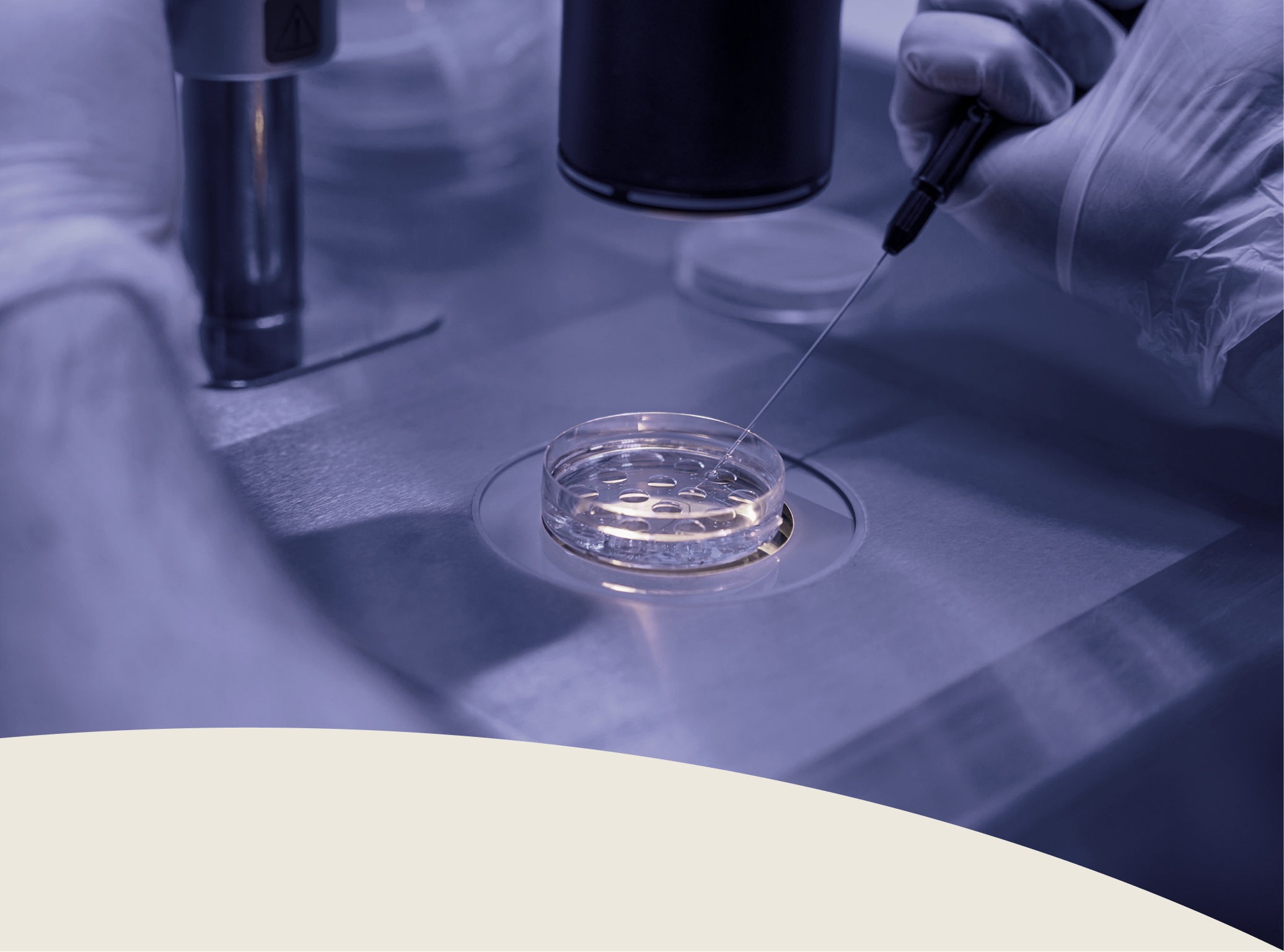
While the science behind IVF treatment is advanced, the goal is simple: to give you the best possible chance of achieving a healthy pregnancy. Whether IVF is right for you depends on your individual circumstances, and understanding the process is an important first step.

How does IVF work?
IVF follows a carefully structured and closely monitored process, designed to support fertilisation and early embryo development in a controlled laboratory environment.Each stage is tailored to your individual response and medical needs.
Ovarian Stimulation
IVF treatment begins with hormone medication to encourage the ovaries to produce multiple eggs within a single cycle. In a natural cycle, only one egg typically matures each month. IVF aims to develop several eggs to improve the chances of successful fertilisation.
During this phase, your treatment is closely monitored and adjusted based on your response.
You will typically have:
- Regular ultrasound scans to monitor follicle development
- Blood tests to assess hormone levels and ovarian response
- Medication adjustments to ensure optimal safety and effectiveness
This careful monitoring allows our specialist team to support the development of mature, healthy eggs.
Egg Retrieval
Once the eggs are ready, they are collected in a minor medical procedure called egg retrieval.
The procedure is performed under sedation to minimise discomfort, and most patients do not experience pain during the procedure. A fine needle is gently guided through the vaginal wall into the ovaries to collect the eggs.
After the procedure, most patients:
- Go home the same day
- Experience mild cramping or bloating
- Return to normal activities shortly after rest
Egg retrieval is carefully timed based on your hormone levels and ultrasound results.
Fertilisation
After retrieval, the eggs are taken to a specialised laboratory where fertilisation takes place under controlled conditions.
There are two main methods:
- Conventional IVF: eggs are combined with sperm and fertilisation occurs naturally in the lab
- ICSI (Intracytoplasmic Sperm Injection): a single healthy sperm is injected directly into each mature egg
ICSI is commonly used for male-factor infertility and may also be considered when previous IVF has resulted in failed or very poor fertilisation.
Embryo Development
Once fertilisation occurs, embryos are monitored closely over the next several days as they grow and divide.
Embryologists assess:
- Cell division and growth patterns
- Development speed
- Overall embryo quality
Embryologists assess embryo development and quality to help identify the embryo or embryos most suitable for transfer. In some cases, embryos may be frozen for future use, depending on your treatment plan.
Embryo Transfer
Once fertilisation occurs, embryos are monitored closely over the next several days as they grow and divide.
Embryologists assess:
- Cell division and growth patterns
- Development speed
- Overall embryo quality
Embryologists assess embryo development and quality to help identify the embryo or embryos most suitable for transfer. In some cases, embryos may be frozen for future use, depending on your treatment plan.

Who might need IVF
IVF may be recommended when natural conception is difficult or when female fertility or male fertility factors are affecting the chances of pregnancy.
Common reasons include:
IVF vs Other Fertility Treatments
IVF is not always the first step in fertility treatment. It is usually recommended when simpler treatments are unlikely to be effective or have not been successful.

How IVF Works, Full Process Explained
A complete, easy-to-understand walkthrough of the IVF process, from your first daily injection to your pregnancy scan. Professor Tim Child of the University of Oxford explains every stage, including ICSI, blastocyst culture, time-lapse imaging, embryo biopsy (PGT) and frozen embryo transfer.
What are thesuccess rates?
What to Expect Emotionally
IVF can be emotionally as well as physically challenging.
Many patients experience a mix of hope, anxiety, and uncertainty throughout the process, particularly during waiting periods.
Having a supportive clinical team that communicates clearly and provides reassurance can make a meaningful difference throughout your journey.


Your IVF journey
Many patients in Saudi Arabia have traditionally travelled abroad for IVF treatment. Our goal is to provide that same level of expertise closer to home.
Led by Professor Tim Child, a globally recognised fertility specialist, our team brings world-leading expertise to Saudi Arabia, with clinicians trained at Oxford University.
We use advanced reproductive technologies to identify the underlying causes of fertility challenges and create highly personalised treatment plans.



Frequently Asked Questions
Most parts of IVF are well tolerated, although some discomfort can occur during hormone injections and after egg retrieval.
The number of cycles needed varies from person to person. Some people conceive after a single cycle, while others may require two or more. Your specialist will discuss realistic expectations based on your individual circumstances, including your age, diagnosis, and response to treatment.
No fertility treatment can guarantee pregnancy, but IVF can significantly improve your chances depending on your individual situation.
IVF can be performed at different ages, but success rates are generally higher at younger ages.
In IVF, sperm fertilises the egg naturally in the lab. In ICSI, a single sperm is injected directly into the egg to assist fertilisation.
IVF is generally considered safe, but as with any medical treatment there are some risks. These can include ovarian hyperstimulation syndrome (OHSS), multiple pregnancy if more than one embryo is transferred, and a small increased risk of ectopic pregnancy. Your specialist will discuss these with you in detail before treatment.